The earliest example of ‘children’s jewellery’ documented by my 2003 PhD Thesis, date to the end of the Ice Age, approximately 10,000 – 8,000BC and consist of an exceptional collection of artefacts unearthed from the grave of a five – seven year old girl in La Madeleine, Dordogne, France. The rarity of this find must be emphasised, as knowledge of jewellery from the Prehistoric world is extremely limited. Evidence relies predominantly on archaeological excavations; may only reveal a fraction – and is therefore suggestive – of what would have been worn during the period; its associations with children are virtually unknown. The existence of this extraordinary grave group alone may not necessarily indicate children’s fashions for these times but it substantiates the fact that children were adorned and associated with jewellery as early as the Prehistoric era.
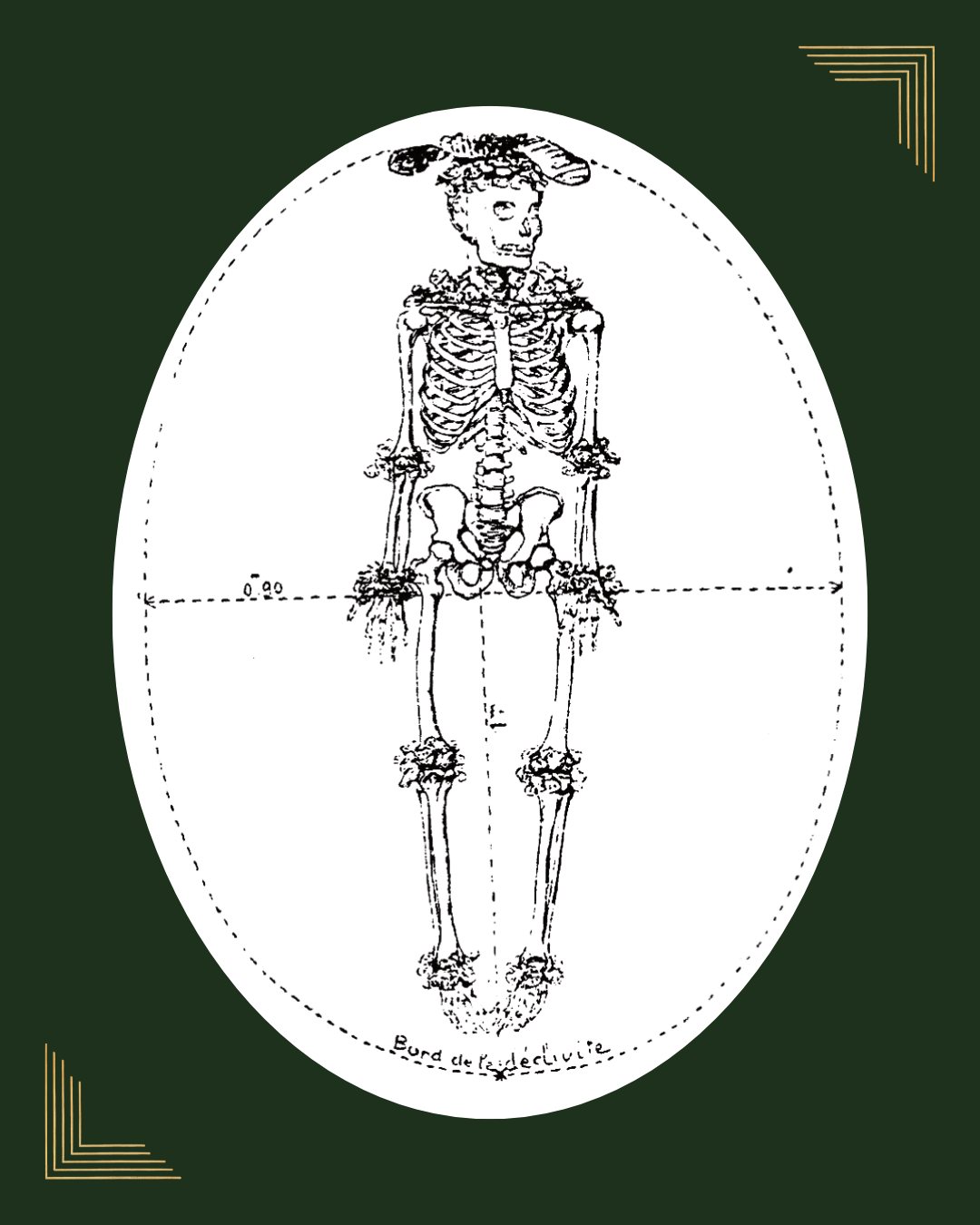
The remaining skeleton of this Prehistoric girl (uncovered lying flat on her back with both arms, placed palms down, on either side of her torso) was adorned with numerous items of jewellery arranged very systematically and lavishly around her head, neck, elbows, wrists, knees and ankles. In total, the child is seen to be wearing ten pieces: a head wreath, a necklace and pairs of elbow, wrist, knee and ankle bracelets. The construction of each item is very similar in style and appears to consist of masses of beads assembled, in the main, from a few hundred animals’ teeth and about four hundred small snails’ shells. The actual composition of each piece is unknown, as the string or twine, which no doubt held the beads together, has since deteriorated, but included beaded strands containing various mixtures of the teeth and snails. Other items found incorporated within the jewellery include a bone belonging to a small bird, the canines as well as four large teeth of a carnivorous animal, and two teeth from a deer.
Although the grave group unquestionably belongs to a child, the items are not necessarily specific to children themselves as the style and use of materials displayed by the jewellery, reflects those of Prehistoric adult fashions. Jewellery, at this time, especially necklaces and bracelets, consisted of simple beads constructed from natural, organic or ‘raw’ materials – the typical jewellery artefacts found at the excavations of early settlements. The archaeological evidence further explains that the seemingly extravagant adornment of a child’s body in so many items may not represent what the child would have worn in life. Rather, it illustrates the types of jewellery presented to a child, in burial, by parents and other family members. In the following illustration dating to around 20,000BC from the ‘Grotte des Enfants’ cave in north-west Italy, the skeletal remains of a double burial show the lower torsos of two young children to be covered with large numbers of sea shells. Although not documented to be items of jewellery, if the similarity of this example is compared to the grave of the young girl, it is clear that it was not uncommon for children to be buried, during the Prehistoric period, in such a decorative manner.
It is further indicated that the majority of jewellery items found within the girl’s grave group are known to be of considerable worth. Hierarchical systems concerning the association of value with materials are known to have existed within Prehistoric society. The bone and teeth of animals, for example, possessed greater monetary worth than simple seeds or berries. Such items, i.e. bone and teeth, were generally obtained from the results of hunting expeditions and were therefore more difficult to acquire, they required greater skill to work than seeds or berries, and were often elevated to talismanic status – all factors which inevitably raised their value. Evidence also suggests that materials such as shells were traded throughout Prehistoric communities and therefore, in order to have acquired these objects, some form of exchangeable monetary goods would have been required. The occurrence of the larger, more unusual objects, i.e. the bone of a bird, the four teeth with holes and the teeth of a deer, may reveal a more personal selection of burial items relevant to the child’s local surrounding – reindeer, for example, were local to the Dordogne area where the child was buried. Perhaps they belonged to the child during life or maybe they were intended as amuletic tokens, chosen specifically by the family as protection in the afterlife.
It could be deduced that the abundance of jewellery within this grave group primarily signifies the successfulness and importance of the girls’ family members within Prehistoric society at La Madeleine in France. Since the grave group contains an overwhelming amount of ‘valuable’ items, their occurrence must also suggest the family’s financial standing. Regardless of whether such a display is an overt exhibition of status, wealth and achievement, or simply a decorative gesture by those who could afford such luxuries, the amount of preparation and attention revealed by this girl’s grave, reveals the care this family bestowed upon the body of its deceased child. Although this example does not signify what Prehistoric children wore in everyday life, the richness of the burial illustrates that children were obviously respected enough by this society to be given jewellery.
This sole example dating back thousands of years, therefore provides evidence to state that children, in Europe, have been adorned, associated with and given jewellery, since at least 10,000BC.
References:
This object is referenced here as part of a broader visual and textual study of children’s jewellery in historical art.
Fig 2: c.10,000 – 8,000 BC
Jewellery Grave Group consisting of a head wreath, necklace and pairs of elbow, wrist, knee and ankle bracelets made from animals’ teeth and snails’ shells
Skeleton of a Five – Seven Year Old Girl Known As ‘The La Madeleine Infant’
La Madeleine, Dordogne, France
Published in:
McAleer: Children’s Jewellery In Europe: Traditions And Contemporaneity: PhD Diss Royal College of Art, 2003: pp66-69 fig 2
Hoffman; Triede: Schmuck früher Kulturen und ferner Völker: 1976: p11